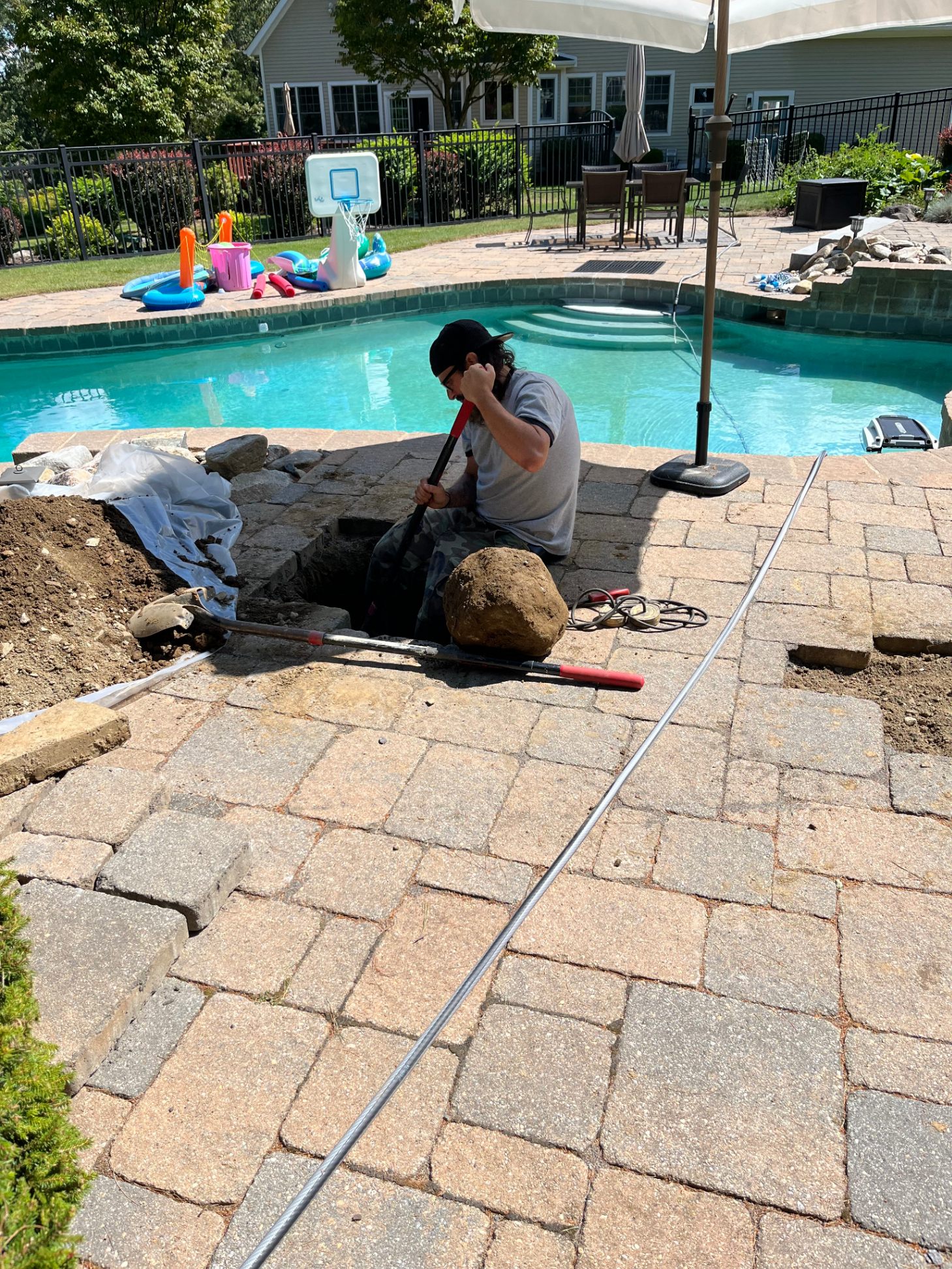
5 Signs Your Pool Is Leaking (And What to Do)
Losing water in your pool? It might not be evaporation. Here are five telltale signs your pool has a leak — and why catching it early saves you money.

5 Signs Your Pool Is Leaking (And What to Do)
Every pool loses some water — that's normal. Splash-out, evaporation, and backwashing all contribute to water loss. But when your pool is dropping more than a quarter inch per day, something else is going on.
A leak left undetected can erode your pool's foundation, damage surrounding landscaping, drive up your water bill, and lead to expensive structural repairs. The good news? Most leaks give you warning signs before they become serious problems.
Here are five signs your pool may be leaking — and what to do about each one.
1. You're Losing More Than ¼ Inch of Water Per Day
The easiest way to tell if your pool is leaking is the bucket test.
Fill a bucket with pool water and set it on a step inside the pool. Mark the water level inside the bucket and on the pool wall. After 24 hours, compare the two levels.
- If both dropped equally — you're dealing with evaporation, which is normal.
- If the pool dropped more than the bucket — you likely have a leak.
On average, pools lose about ¼ inch per day to evaporation. Anything beyond that warrants a closer look.
2. Your Water Bill Has Spiked
A pool that's constantly losing water needs to be constantly refilled. If you've noticed your water bill creeping up without a clear explanation, your pool could be the culprit.
Even a small leak — say, a crack in a return line — can waste thousands of gallons per month. That's money going directly into the ground.
3. You're Adding Chemicals More Frequently
Water chemistry is a balancing act. When you're constantly adding chemicals to maintain proper levels, it's often because fresh water is diluting the pool faster than normal.
If your chlorine, pH, or alkalinity levels seem impossible to stabilize despite regular treatment, water loss from a leak may be throwing off the balance.
4. You Notice Wet Spots or Soft Ground Around the Pool
Walk the perimeter of your pool after it's been sitting overnight. If you notice:
- Soggy or unusually soft ground near the pool edge
- Puddles that appear without rain
- Grass or plants that are greener or growing faster in one area
...water is likely escaping underground and saturating the soil. This is a strong indicator of a plumbing or structural leak.
5. Cracks in the Shell or Deck
Visible cracks in your pool's shell, tile line, or surrounding deck aren't just cosmetic issues. They can be entry points for water to escape — or signs that shifting soil (often caused by a leak) is putting stress on the structure.
Small hairline cracks can be deceiving. What looks minor on the surface can be a significant leak path underneath.
What to Do If You Suspect a Leak
Don't wait. The longer a leak goes undetected, the more damage it causes — to your pool, your yard, and your wallet.
Step 1: Run the bucket test to confirm water loss beyond normal evaporation.
Step 2: Check your equipment pad for drips, wet fittings, or moisture around the pump, filter, and heater.
Step 3: Call a professional for a proper leak detection. At Precision Aquatic Solutions, we use acoustic listening equipment and pressure testing to pinpoint the exact source of any leak — without unnecessary digging or guesswork.
A written report with findings and repair recommendations is included with every leak detection we perform.
Don't Guess — Diagnose
Most pool companies will take a look and make an educated guess. We take a different approach. Our diagnostic process is systematic, precise, and designed to find the problem the first time.
If you're seeing any of these signs, contact us to schedule a leak detection. We serve homeowners across Massachusetts and Connecticut — and we'll find the problem others miss.
Explore Topics
Written by
Precision Aquatic Solutions
Content creator and writer sharing insights and stories.